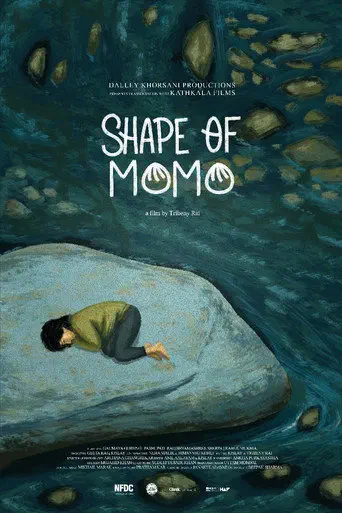
Shape of Momo
Drama Family Nepali
Bishnu returns to her Himalayan village after quitting her job, only to face mounting family pressures and societal expectations. As tensions rise with her pregnant sister's arrival and a budding relationship with a "suitable" boy from her community, Bishnu must choose between conforming to tradition or claiming her independence.
| Cast: | Gaumaya Gurung, Pashupati Rai, Shyama Shree Sherpa, Rahul Nawach Mukhia, Janaki Kadayat, Sonam Bomzon, Bhanu Maya Rai, |
|---|---|
| Director: | Tribeny Rai |
| Writer: | Kislay Kislay, Tribeny Rai |
| Editor: | Aalayam Anil Kumar, Kislay Kislay |

All Guild Reviews of "Shape of Momo"
A Treat on Relationships

Rai's film is an authentic portrait of a young woman who refuses to let her standing and opinions be defined and restrained by gender
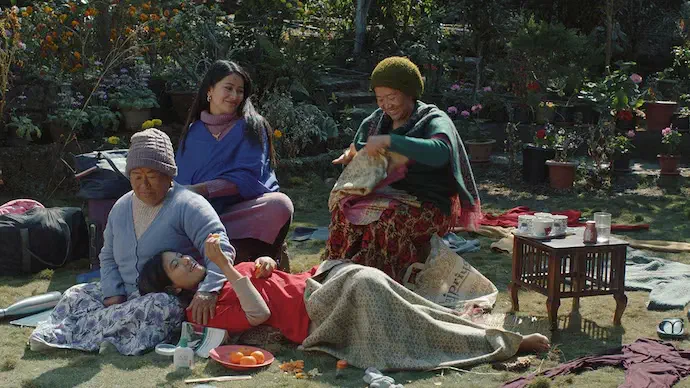
All Bishnu wants is to show she can do it all. Lift a gas cylinder. Ensure the family in the orange orchard pays up. Get her elder sister to finish her graduation. Get into a relationship. And not care ‘ki log kya kahenge’. But patriarchy lurks like a dark shadow in the village to which she has returned after a stint in New Delhi. And women have made peace with their roles and gender dynamics. So when Bishnu behaves like the man of the house, there are clashes with her mother and sister. For Bishnu’s mom, asserting independence is a way of disbanding from the community; for Bishnu, it is just the natural way to be. For her pregnant sister, there are regrets; for Bishnu, it’s never too late to do what you want. “I’ll see what kind of a husband a judgemental person likes you gets,” remarks her sister while her mother has had it with her temper and irritable behaviour.
Never at Home With Generational Patriarchy

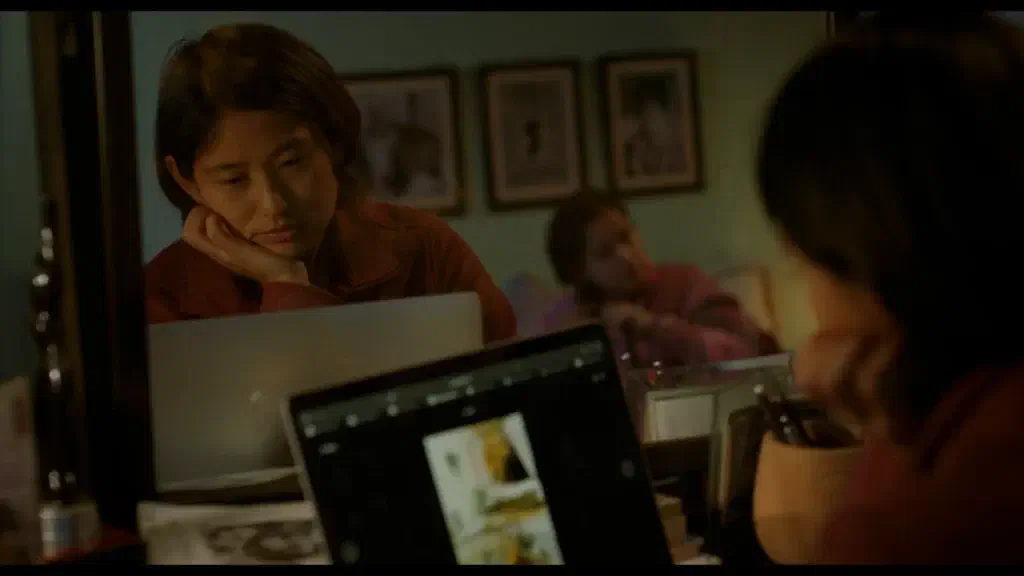
Why would anyone name a cat Azaadi? Perhaps every time you call your companion animal by that name, you give voice to an ache to break free. At the heart of the Nepali-language film Shape of Momo is Bishnu’s (Gaumaya Gurung) tabby cat, named exactly that. Aazadi isn’t an animal protagonist so much as a metaphor for the film’s politics of gender. The family rues that they should have liked a tomcat instead because a female cat would keep having litters. While it’s a perfectly practical concern in a domestic setting, Tribeny Rai’s debut feature is also about a generational belief that a family is somehow incomplete without a son.

WHEN HOMECOMING ISN’T a ONE-WAY STREET

A nuanced exploration of womanhood, belonging, identity, and resistance within the confines of a traditional Sikkimese society.
Shape of Momo (Nepali title: Chhora Jastai), directed by Tribeny Rai, emerges as one of the most compelling independent films of the year. Set in the picturesque landscapes of Sikkim, this intimate coming-of-age drama explores themes of womanhood, identity, migration, family expectations, and personal freedom. In this review, critic Saibal Chatterjee examines how Rai crafts a powerful narrative about a young woman’s struggle to reconcile her evolving sense of self with the expectations of the community she once called home. First-time director Tribeny Rai’s Nepali-language Shape of Momo starts with a poem that the protagonist, a young woman who has quit her job in Delhi and retreated to her family home in Sikkim, recites, intoning each word with intent and clarity.

A Finely Tuned Film About Family and Finding Oneself

Tribeny Rai's Sikkim-set debut film is a closely observed portrait of a young woman in limbo
The title of Tribeny Rai’s debut is a mild criticism. Bishnu (Gaumaya Gurung) can make momos, they even taste fine—but they look weird. It’s a running joke in the family. “No one would believe you’re from Sikkim,” her sister, Junu (Shyama Shree Sherpa), teases her. This doesn’t seem to bother Bishnu as much as what perfectly shaped momos symbolise for her—another annoying standard that women are supposed to live up to. As though in solidarity, the film around Bishnu is misshapen too. I don’t mean this in a negative sense. Most films aim for defined shapes of exposition, character motivation, narrative structure because it’s expected and safe. Shape of Momo has a looser, more introspective progression, which seems more representative of life in this quiet Sikkim village and the limbo Bishnu finds herself in.
Balancing a World That Never Balances

A fragrant whiff of fresh air
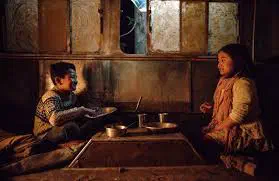
At one level, ‘Shape of Momo’ unfolds like a gentle love letter to one’s roots. Set in Sikkim, it unpeels the many layers equally. A festival favourite, with its world premiere at the 30th Busan International Film Festival in 2025, it won the Songwon Vision Award and the Taipei Film Commission Award. The narrative begins innocuously. Bishnu (Gaumaya Gurung), back in her home in a village in Sikkim, is reading what seems like a poem. Soon, we meet women representing three generations. In this home bereft of male presence, women nurse their own set of fears and anxieties and, above all, an urgency to conform. Only, Bishnu, fresh from experiences of the outside world, is not ready to accept things the way they are and has several run-ins with the men of her village.
A Grounded Anti-Homecoming Tale That Exudes Authenticity

Set in Sikkim, Tribeny Rai’s feature looks beneath the idyllic village into the dynamic that drives it.
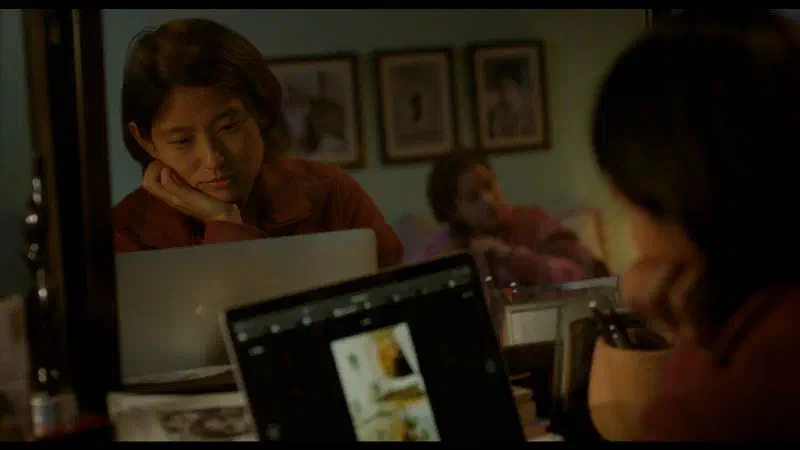
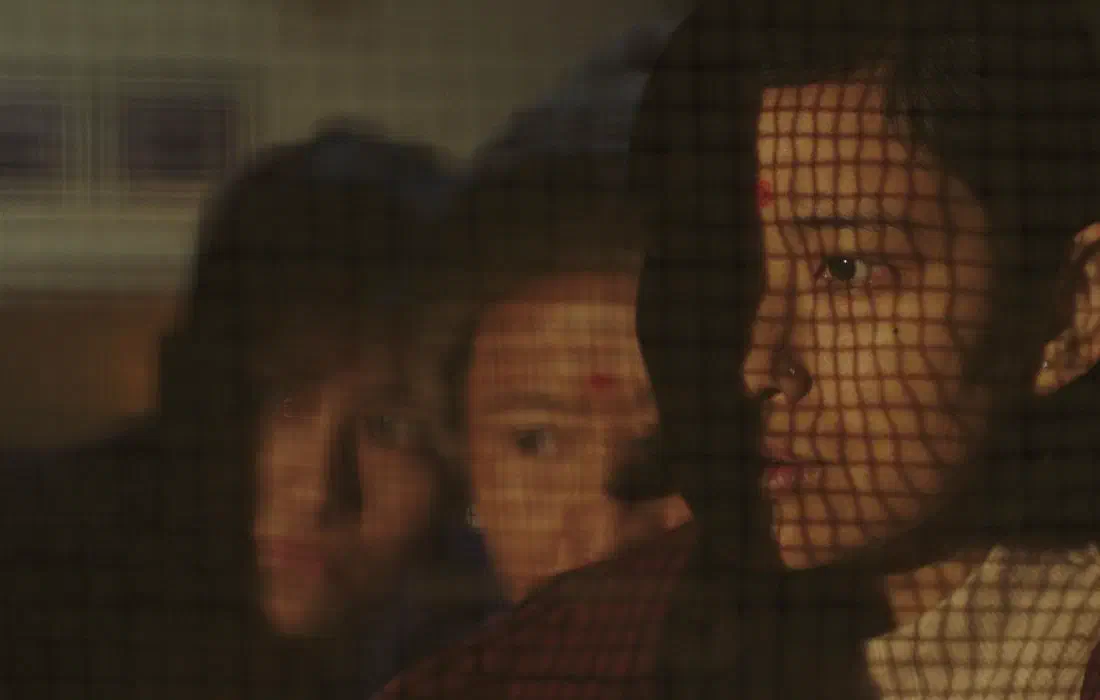
Bishnu (Gaumaya Gurung) is a writer in her bones, which explains why we see her continuously grappling with the world. While those around Bishnu go through life with less fuss, we see her recording nearly all experiences from outside, trying to gauge the subtext of each and every conversation, the pauses, closely examining one’s train of thought, questioning it, and trying to understand why one bit leads to the other. An insider-outsider in her village in Sikkim, having returned after quitting a copywriting job in Delhi, she sees the town with a new set of eyes. Tribeny Rai’s Shape of Momo takes the idea of a ‘homecoming film’ – where characters are usually forced to visit home and resolve their friction with the place – and flips it.
A Haunting Portrait of Patriarchy, Sisterhood and Belonging

A tender exploration of womanhood, belonging, and the invisible weight of patriarchy set against the breathtaking landscapes of Sikkim, where home is both sanctuary and a cage. The film observes the quiet resilience of women living without men.
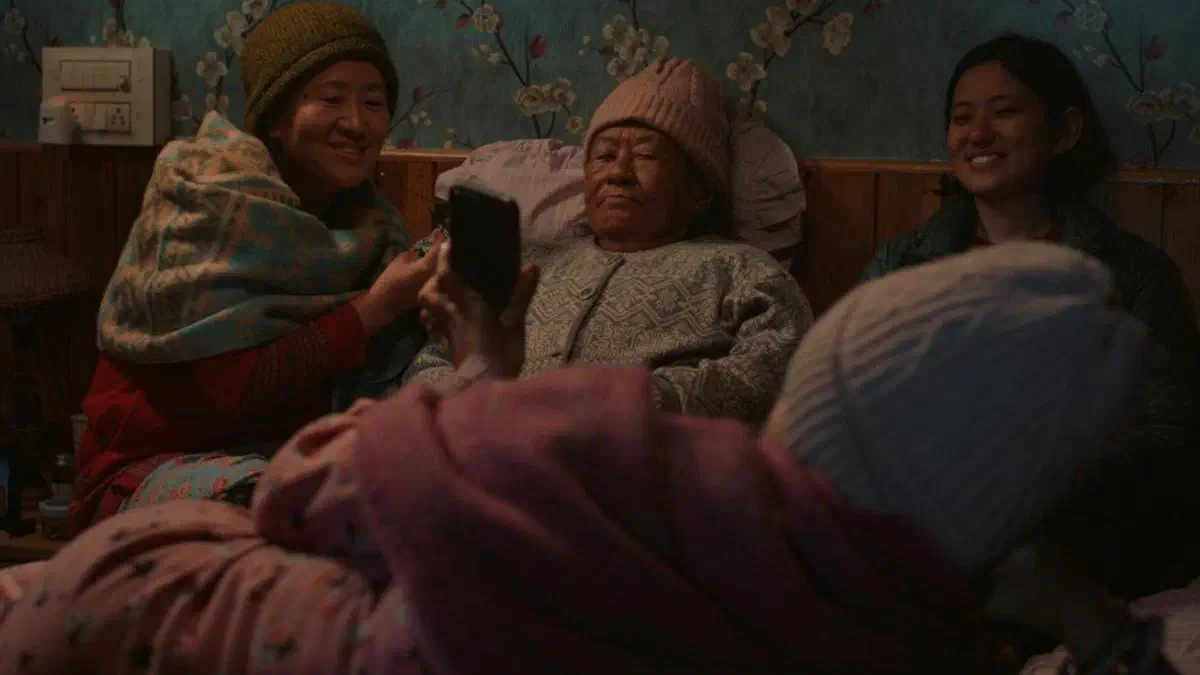
Shape of Momo is a poignant semi-autobiographical drama set in the hills of Sikkim that quietly examines patriarchy, migration, and the painful process of outgrowing a home you still deeply love. Through a metaphorical title, the film explores how women are constantly “shaped” by societal expectations and inherited conditioning. At its centre is Bishnu, a 32-year-old woman who resists conformity in subtle yet powerful ways. Her quiet rebellion becomes the emotional core of the story. The narrative follows four women across three generations of a male-less household, each negotiating a society that views such a family as vulnerable, unsafe, and incomplete. Bishnu’s mother survives through caution and strategy, her sister embraces the conventional route of marriage and motherhood, while the grandmother clings to pride in her sons — one deceased, the other living abroad in Dubai, forever postponing his promise to take her with him. In the absence of a male figure, the women endure prejudice, threats to their safety, and constant undermining by workers and tenants at their orange orchard. Ironically, the film highlights how society conditions women to believe they need the presence of men for protection often from men themselves.
Beyond the Perfect Fold

Tribeny Rai’s standout debut is an intimately observed, biting critique of female autonomy and homecoming which proves that while the shape of entitlement may vary, its taste stays bitterly the same
We often believe that Northeastern society enjoys far greater gender parity than the Hindi heartland. Yet, watching Shape of Momo, we realise that while the shape of patriarchy may vary, its taste remains exactly the same. Here, the humble dumpling becomes a brilliant, tactile metaphor for the rigid social architectures women are forced to inhabit. Between the geometry of conformity and imperfection as resistance lies a tender coming-of-age story worth savouring. Often, the luminescence of cinema lies not in loud rebellions but in the mapping of invisible boundaries. Tribeny Rai’s debut feature delivers a gentle, sharp-witted exploration of autonomy, inheritance, and the friction of modern ideals against ancestral soil. Along the way, the film effectively dismantles romanticised views of Himalayan communities, highlighting economic disparities, migrant labour issues, and gender expectations in a cultural context.
Latest Reviews

The Diplomat S04
Drama, War & Politics (English)
Amid an international crisis, a US diplomat contends with her high-profile job as ambassador to the… (more)


Nayyi Navelli
Adventure, Fantasy, Comedy, Drama (Hindi)
A new bride's arrival turns a turbulent household in Meerut into a picture of domestic harmony,… (more)

Street Fighter
Action, Fantasy (English)
In 1993, estranged Street Fighters Ryu and Ken Masters are thrown back into combat when the… (more)

Prahaar: The Untold Story of Ujjwal Nikam
Crime, Drama (Hindi)
Public prosecutor Ujjwal Nikam takes on one of the most high-profile criminal cases in India’s history,… (more)