
Last Man in Tower
Drama Hindi
Masterji is a retired schoolteacher whose refusal to go along with those around him places him in direct conflict with his own community. His act of quiet resistance ripples outward, throwing into relief the choices and compromises of neighbors – including Mrs. Puri – as an offer of change tests what each of them is willing to hold on to.
| Cast: | Manoj Bajpayee, Divya Dutta, Boman Irani, Sukant Goel, Chandan Roy Sanyal, Ujjwal Chopra, Swaroopa Ghosh, Uday Chandra, Madhuri Bhatia, Shrikant Yadav, Salim Siddiqui |
|---|---|
| Director: | Ben Rekhi |
| Editor: | Meghna Manchanda Sen |
| Camera: | Rangarajan Rambadran |

All Guild Reviews of "Last Man in Tower"
Sturdy Storytelling That Offers No New Insight


Ben Rekhi’s Film Dilutes Its Source Material’s Amused Cynicism

Rekhi’s film on Aravind Adiga's novel is passable in theory but I wish I was more affected by it when it ended.
In a hyper-capitalistic city where everything/one is for sale, where desires can be preyed upon as a means to an end, how does one take on a man who wants… nothing? It’s the question at the heart of Aravind Adiga’s Last Man in Tower (2011) – following Yogesh Murthy, a resident of Vishram society, who refuses to cower in front of a gleaming offer by builder Dharmesh Shah. In director Ben Rekhi’s feature film adaptation, Murthy is changed to Mishra, presumably because of Manoj Bajpayee playing the part. Bajpayee played a similarly stoic, wilting Mumbai resident in Bhonsle (2018). Shah is played by Boman Irani, who was a builder in Khosla Ka Ghosla (2006) too. Irani is great at making his villains palpably human. There’s a wonderful moment where he coughs through his chronic bronchitis—and then takes a deep breath of the noxious fumes at a building site. “It gives me life,” he tells a doctor earlier in the film, after being informed about his deteriorating lung condition because of his very line of work.
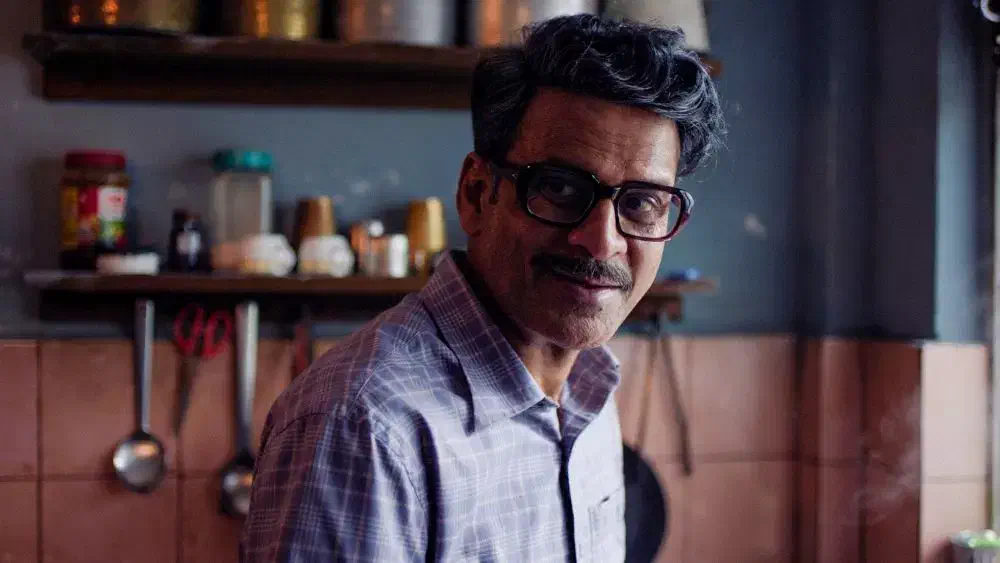
Manoj Bajpayee Gives a Terrific Performance in Film That Needed More Rage

Directed by Ben Rekhi, Last Man in Tower is an adaptation of Aravind Adiga’s novel of the same name. The story revolves around a decrepit residential building in Mumbai and its residents, and how the lure of a better future changes ties when a builder arrives with an offer to acquire and reconstruct the property.
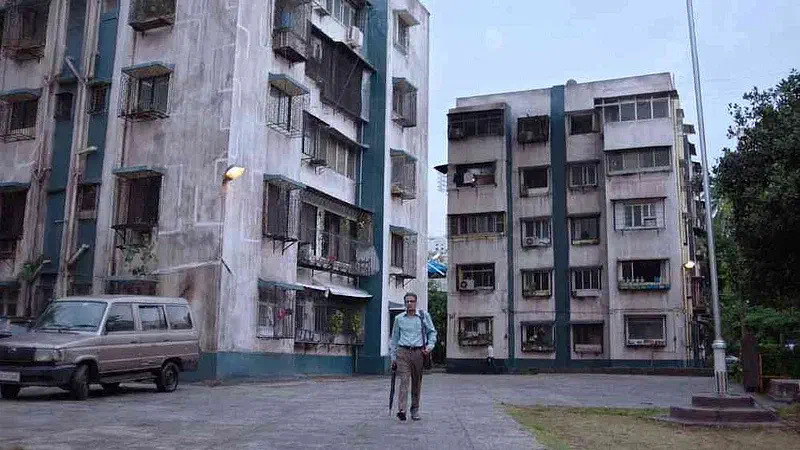
Directed by Ben Rekhi, Last Man in Tower is a perfectly pleasant adaptation of Aravind Adiga’s novel of the same name. But therein lies the problem; it is well-behaved when it should have been transgressive. At its core, this is a cautionary tale about the decaying morality of the Indian middle class, a satire about our collective lack of social trust. But filtered through Rekhi’s lens, the movie comes across as an ode to the undying spirit of Mumbaikars. The story revolves around a decrepit residential building in Vakola, Mumbai, an almost fantastical vessel where men and women of all ages, sexes, and social classes live in relative harmony. The building can be seen as a metaphor for India; a society we imagine existed before it was shredded to pieces by populist politicians. At its (moral) centre is a retired teacher affectionately known by everyone as ‘Masterji’. He’s played by Manoj Bajpayee in a terrific central performance that occasionally reveals the underlying rage that should have been more palpable in the film itself.
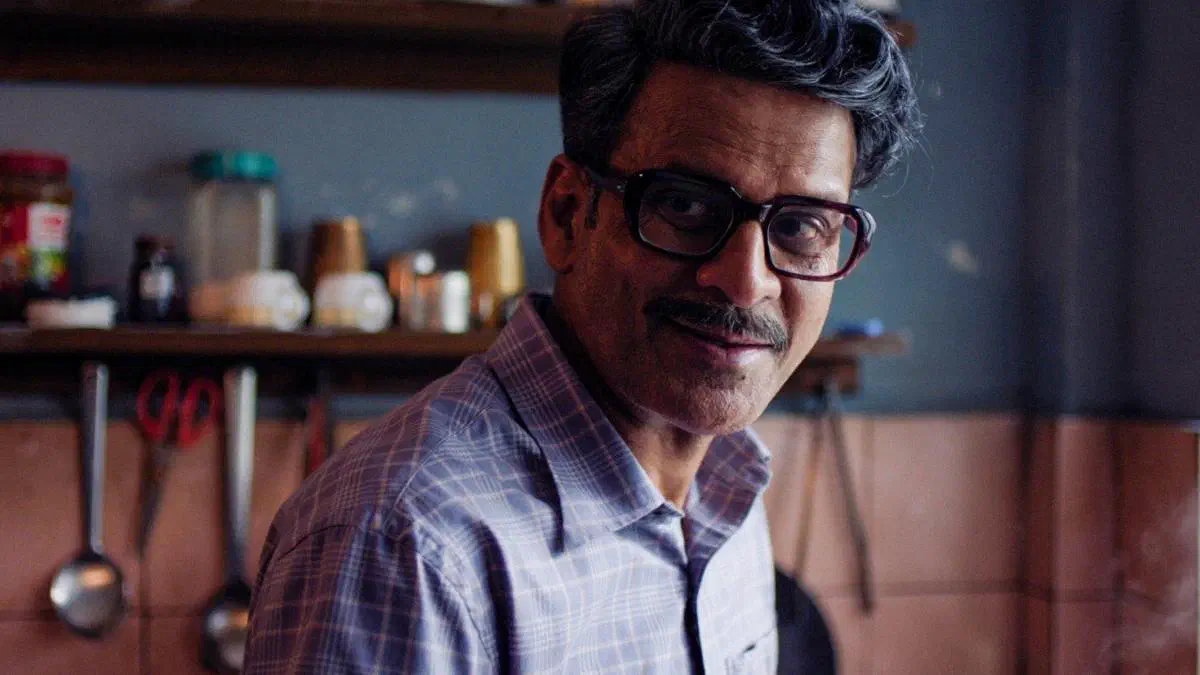
Manoj Bajpayee Elevates This Timely Portrait of Middle-Class Desperation

Adapting Aravind Adiga’s acclaimed novel, Ben Rekhi builds a gripping moral battleground where a community chooses redevelopment to compromise its own foundation.
At the heart of Last Man in Tower lies Vishram Cooperative Housing Society, a decaying, close-knit enclave of middle-class Mumbai families. Their world is upended when a ruthless real estate tycoon, Dharmen Shah (Boman Irani), offers them a life-changing financial windfall to buy out the building for luxury redevelopment. The catch is that the payout is all or nothing, contingent on a unanimous vote. While his cash-strapped neighbours eagerly scramble for a ticket into the modern world, Yogesh Mishra (Manoj Bajpayee), a retired schoolteacher known as Masterji, stubbornly refuses to sign away the home that holds the memories of his deceased wife. What begins as a disagreement quickly degenerates into a psychological social pressure cooker, as the neighborhood’s collective desperation, led by the chirpy Sangeeta Puri (Divya Dutta), turns into targeted malice against the lone dissenter.
Manoj Bajpayee & Divya Dutta Sharpen Moral Stakes in Ben Rekhi’s Frustratingly Defanged Drama

Adapting Aravind Adiga’s 2011 novel, Sooni Taraporevala’s screenplay expunges much of its mordant humour and tips instead to a straight-faced comment on India’s redevelopment boom.
What does it take to plough on even in the face of overwhelming opposition? In Ben Rekhi’s Last Man In Tower, the retired schoolteacher, Yogesh Mishra/Masterji (Manoj Bajpayee), finds himself sanded into a corner. He had supporters but the small number dwindled. This adaptation of Aravind Adiga’s eponymous 2011 novel spins around Mumbai’s Vishram apartment block. It’s one of the many old buildings that real-estate hawks have their eyes on as redevelopment razes the country. Masterji is the polar opposite of the smarmy builder, Dharmen Shah (Boman Irani), who insists everything in Mumbai is for sale. There are still some who fight tooth and nail to preserve those places that are receptacles of their memories, a record of their lives’ intimate tapestries.
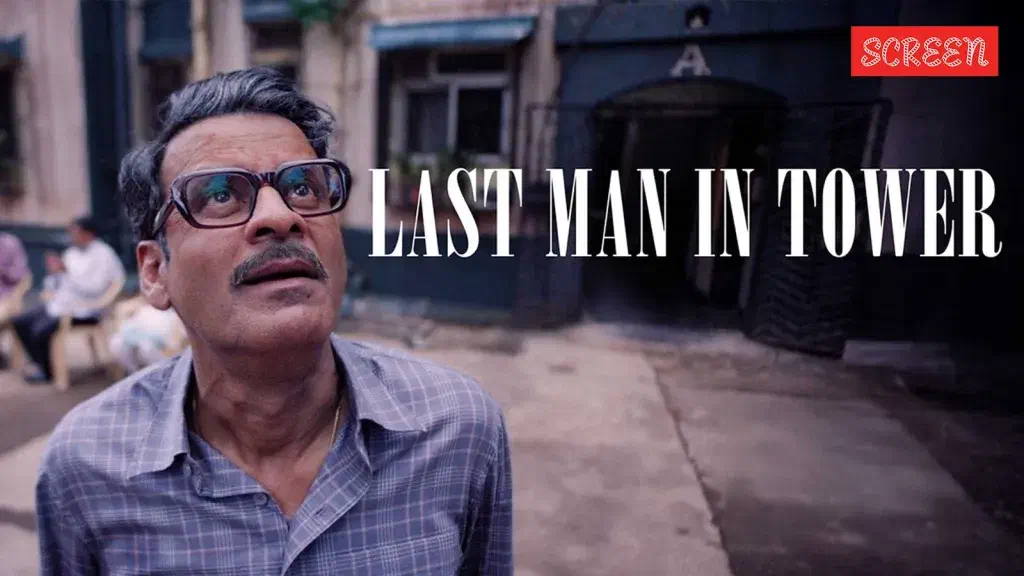
Manoj Bajpayee Film Questions the Cost of Progress

Manoj Bajpayee is the unbending moral centre of the film, a role he gravitates towards with practised ease. This is Divya Dutta’s second stand-out role in 2026, after Chiraiyaa.
Based on Arvind Adiga’s 2011 novel Last Man In Tower, Ben Rekhi’s film of the same name keeps its focus on the main thrust: shark-like developers swooping in on the crumbling parts of Mumbai, swatting aside low-stakes initial reluctance with the promise of fancy high rises. The last man in the way of builder-tycoon Dharmen Shah’s (Boman Irani) rapacious intention is retired teacher Yogesh Murthy (Manoj Bajpayee), who just wants to live out the remaining of his life in familiar surroundings, in a flat which houses the memories of his dead wife.

A Well-Acted and Sobering Middle-Class Tragedy

The poignant drama stars Manoj Bajpayee as a stubborn Mumbai resident resisting the redevelopment of his modest housing colony
Based on Aravind Adiga’s novel of the same name, Ben Rekhi’s Last Man In Tower is defined by its curious relationship with storytelling. It starts out like a vintage Bombay movie with ‘characters’ and designs of a scrappy fairytale about the old guard holding down the brick fort in the face of rampant gentrification. There’s a sense of community and colour. It’s 2010, the setting is a crumbling colony called Vishram (“Rest”) in Mumbai’s suburb of Vakola, and the residents are diverse: the touchy Punjabi lady with a neurodivergent son, the generous old Catholic couple, the fiery single mom accused of ‘communism,’ the mild-mannered building secretary, the lone Muslim family, the street-smart hustler, and the single working girl who becomes the subject of gossip for having a sex life. Retired teacher Yogesh Mishra (Manoj Bajpayee) is the fair and level-headed patriarch of this unofficial family; he tutors the kids and schools the adults.

A Poignant Conflict Between Holding on and Moving Forward

The film explores our inherent tussle between preserving simpler times, community and culture, and embracing the promise of a better tomorrow.
Based on Aravind Adiga’s bestselling novel and adapted for the screen by Sooni Taraporevala, Ben Rekhi’s poignant drama centres on Masterji (Manoj Bajpayee), the lone resident of an ageing Mumbai housing society who resists redevelopment, determined to preserve the home and community he holds dear. His refusal to bow to the demands of his fellow residents and the builder (Boman Irani) soon makes him a thorn in their side. Ironically, his fight to save their community leaves him increasingly lonely and isolated. Viewed as someone depriving them of a better life, the people he once considered friends ostracise him, dismissing his principles as outdated. In a world where everyone is racing to own bigger homes and lead more luxurious lives, our threshold for tolerance, empathy and togetherness has drastically diminished. We crave privacy and space while secretly watching those viral AI videos of families travelling together in cozy vans. We have time to argue with strangers on social media, but barely bother to know our next-door neighbours. The safety net and community culture of Mumbai’s chawls and old buildings are fast disappearing, and Masterji finds himself fighting a losing battle to preserve a way of life that is slowly becoming extinct.
Latest Reviews

Thella Kaagitham
Drama (Telugu)
Two teenagers discover first love amid the innocence, mischief, and uncertainties of adolescence. As they fall… (more)

Dupahiya 2
Comedy, Drama (Hindi)
Dhadakpur, the Belgium of Bihar, is on the cusp of celebrating 25 years of being crime… (more)

Avaraachan & Sons
Drama (Malayalam)
Follows Avarachan, his children and the various family and social relationships that shape their lives.… (more)


Meesaya Murukku 2
Comedy, Romance, Drama (Tamil)
After facing rejection in love and getting into a fight, Jeeva learns about his father Siva's… (more)