
Homebound
Drama Hindi
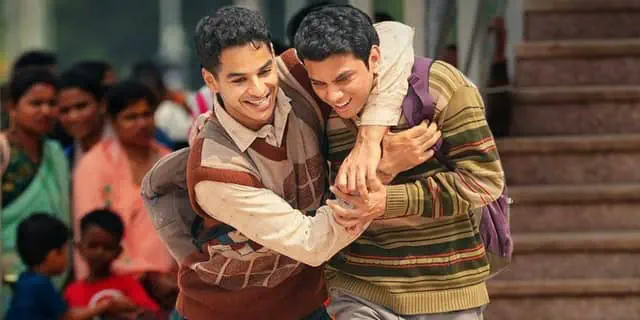
Two childhood friends from a small North Indian village chase a police job that promises them the dignity they’ve long been denied. But as they inch closer to their dream, mounting desperation threatens the bond that holds them together.
| Cast: | Ishaan Khatter, Vishal Jethwa, Janhvi Kapoor, |
|---|---|
| Director: | Neeraj Ghaywan |
| Editor: | Nitin Baid |
| Camera: | Pratik Shah |

All Guild Reviews of "Homebound"
A Touching, Telling and Timely Zeitgeist of the Tumultuous Times We Live In

Does cinema have the power to change? The jury is (perennially) out on that one. Homebound comes close, very close, to providing the answer. For me, the experience of watching this film felt like my heart had been wrenched out of my body, dessicated into a million pieces and put back again. I am still me, but the experience of Homebound makes me feel I am not the same.

Two Friends and a Country Full of Obstacles

Neeraj Ghaywan's ‘Homebound’, recently chosen as the official entry to the Oscars, shows how unforgiving life can be if you're the wrong kind of Indian
What’s in a name? Everything, suggests Homebound, if you live in India. “When you’re in uniform, no one reads the badge,” Shoaib (Ishaan Khatter) tells Chandan (Vishal Jethwa) in Hindi. The English subtitle, a little over-eager, provides the subtext, rendering this as: “Your faith and caste no longer matter.” But, of course, they do, and names are the first battlement to be protected and attacked. Inquiring about the results of his police recruitment exam, Chandan offers only his first name when asked, and his surname as the caste-neutral Kumar when pressed. His slight hesitancy is enough to tip off the clerk he’s talking to, who immediately switches from offering sympathy to mocking the boy about reservations.
A Confrontation and Dissection of India’s Sociopolitical Core

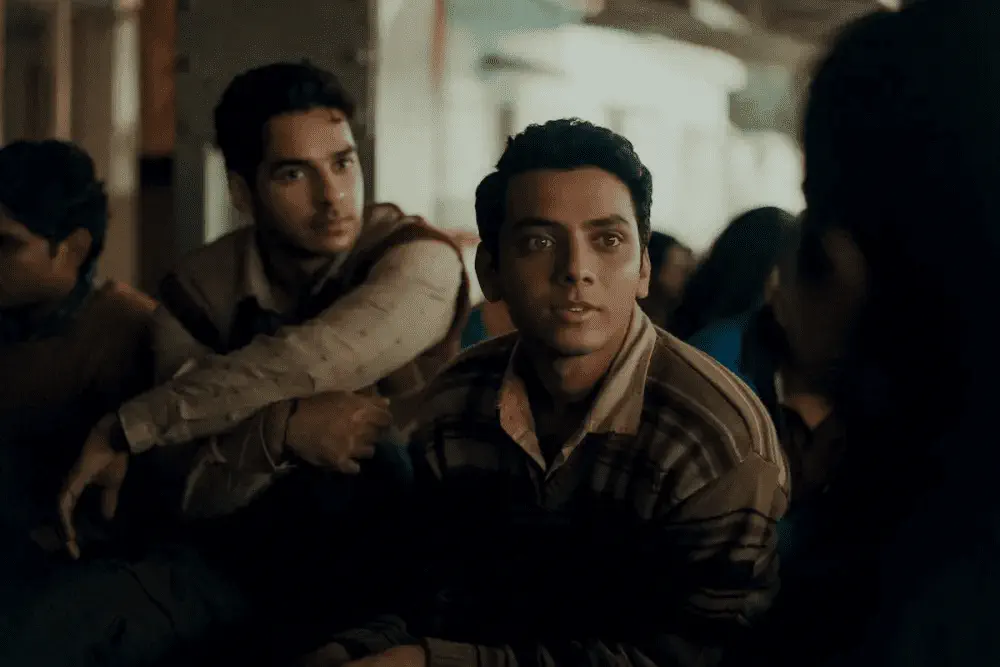
In Neeraj Ghaywan’s new film Homebound, Vishal Jethwa and Ishaan Khatter play Chandan Kumar and Mohammed Shoaib Ali, respectively, two best friends whose identities bolster their interpersonal dynamics as much as they make them precarious in their relationship to the rest of the country. Shoaib comes from a Muslim family in India’s Hindi heartland; his father is a farmer in his last legs, quite literally. His knees are done, and he is unable to tend to his field. Chandan belongs to a working-class Dalit family; his parents are laborers, and his sister, not the chosen one for education, cleans after the children in a local government school. These factors that make up the length and breadth of India’s fault lines don’t come between Chandan and Shoaib or their families. Still, two decades into the first century and almost seventy years after independence, they determine everything from the quality of daily life to their future.

Ishaan Khatter, Vishal Jethwa, Janhvi Kapoor Film Unflinchingly Brings Up Troubling Home Truths

Neeraj Ghaywan's second feature in a decade may or may not bring an Oscar home, but what it offers is compassion and cautious optimism, something we so desperately need in these times.
The film opens with two young men, Chandan and Shoaib, making their way into the centre of a heaving crowd, creating space for themselves. The location is a train station, from where they hope to be borne away, yearning for the ‘ijjat’, and ‘paisa’ which will allow them the dignity they have clearly been deprived of all their lives.

Neeraj Ghaywan Applies Balm on the Cracked Heels of a World Pulling Apart

Lit up by endearing performances of Ishaan Khatter and Vishal Jethwa, the uplifting friendship drama, set against an environment of social mistrust and a notorious virus, is a significant document of our times
In May 2020, the newspaper image of a wiry Saiyub holding an unconscious Amrit in his lap on a scorched highway in Madhya Pradesh came across as an antidote to the raging virus. Fate has its own destiny. It was not just a melancholic picture of abiding friendship, Saiyub took Amrit home when a section of the media was projecting Muslims as super spreaders. Journalist Basharat Peer tracked the story of two friends to their village in eastern Uttar Pradesh for The New York Times.

A Triumph of Empathy in an Age of Curated Stories

Chosen as India’s official submission to the Oscars, Neeraj Ghaywan’s film refuses to rely on its courage alone
Hope is the star-crossed protagonist of “Homebound”, a film that retraces the margins of Indian living as the layout of a ‘Snakes and Ladders’ board game. The pattern is unforgiving. Every time there is progress, it is inevitably punctured by a cruel twist of fate; every small leap is laced with the threat of a steep fall. An office peon impresses the bosses and gets promoted to salesman against the odds, but the feel-goodness is short-lived. A young factory worker sends money back home to fund a concrete roof, but his underdog-ness is transient. A bitter spat is followed by a life-affirming reunion, but the joy is brief. This constant snuffing out of hope reflects the skewed social structure of a country where everything — including emotions — are hierarchical. There is no respite; indignity has a pecking order.

Neeraj Ghaywan Gifts India a Modern-Day ‘Jai-Veeru’ Saga

There’s a long stretch, or one that feels long, in Neeraj Ghaywan’s Homebound, where the leading men, Shoaib (Ishaan Khatter) and Chandan (Vishal Jethwa), aren’t talking to each other. They’ve fought; one hit the other over a competitive exam result where millions appeared for a thousand odd vacancies. Shoaib is Muslim, Chandan is Dalit, both from the working class with zero privileges. And once the men reunite, it is as if sunshine returns to the film. That is the power of screen friendships, I guess. Thanks to my newfound obsession with Sholay, I could not help drawing an unlikely parallel: this duo is the Jai–Veeru of our times.

Latest Reviews


Pradhama Drishtiya Kuttakkar
Thriller, Drama (Malayalam)
Follows a woman constable who joins the police force through appointment after the death of her… (more)
About an Intimate Matter
Drama (Bengali)
Swarna is a dedicated high school science teacher who relocates to a conservative suburban town with… (more)


Reporting Live
Crime, Thriller (Hindi)
A young reporter and her reluctant cameraman chase a story, only to get entangled in an… (more)