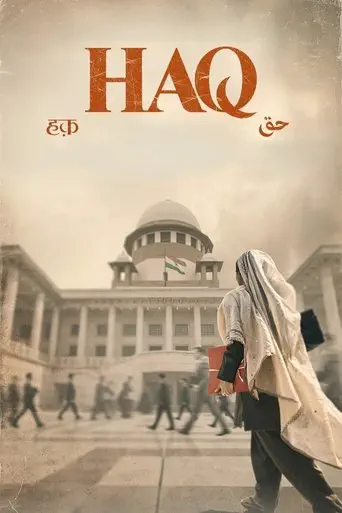
Haq
Drama Hindi
In 1980s India, Shazia Bano takes her husband to court after he abandons her and their children, sparking a national battle over faith, women’s rights, and justice.
| Cast: | Yami Gautam, Emraan Hashmi, Danish Husain, Sheeba Chaddha, Vartika Singh, Aseem Hattangady |
|---|---|
| Director: | Suparn Verma |
| Writer: | Reshu Nath |
| Editor: | Ninad Khanolkar |
| Camera: | Pratham Mehta |

Guild Reviews
A Spotify Review

Haq, the new propaganda movie starring Yami Gautam Dhar and Emraan Hashmi, is even more insidious than. We talk about the film’s harmful stereotypes, the irresponsibility of presenting an entire community as savages, and drawing a direct line between bad behaviour and faith. We also discuss the film’s sloppy storytelling, childish approach to complex ideas, and its constant need to spoon-feed its audience.
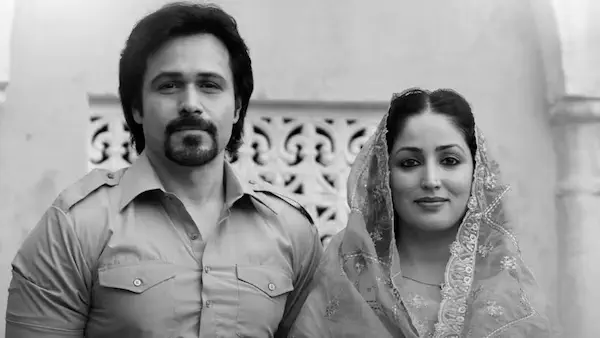
Suparn Varma’s Haq Is A Persuasive Take On The Shah Bano Case

HAQ becomes a better film once it ends. The Suparn Verma directorial feature is based on the landmark 1985 Shah Bano case, where a Muslim woman won her right to alimony. Although personal, her fight assumed big proportions because it revealed the knotty relationship between Muslim Personal Law, where a husband is entitled to provide maintenance during the iddat period after divorce, and the Indian secular law. In this particular case, the Supreme Court ruled in favour of Bano; later, the then-Congress government offset the judgment by sanctioning women to receive “reasonable and fair provision and maintenance" for three months after the divorce; Haq concludes by mentioning this, applauding, in the same breath, the current government for criminalising triple talaq and passing the Muslim Women (Protection of Rights on Marriage) Act, 2019.
A logical film with great emotional depth.

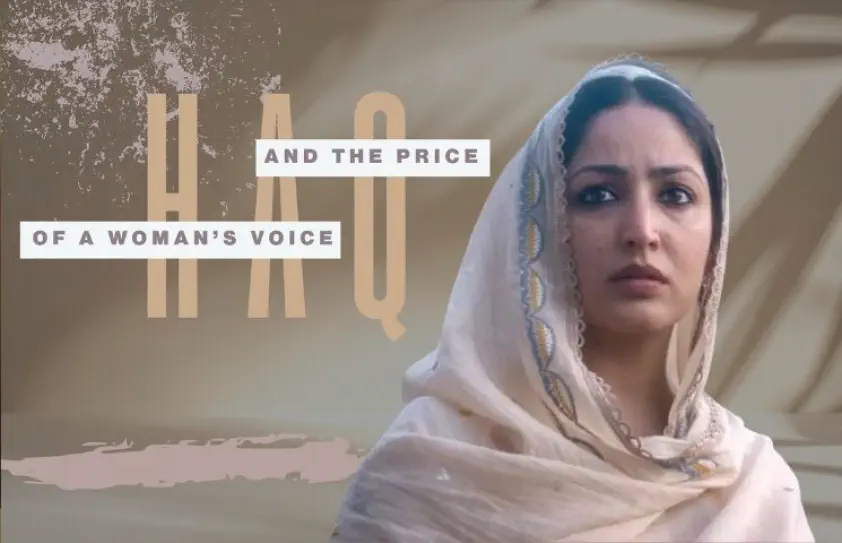
Haq and the price of a woman’s voice

In 1978, Shah Bano, an elderly Muslim woman from Indore, filed a petition seeking maintenance that her estranged husband, Mohammed Ahmad Khan, had abruptly ceased paying. What began as a private plea for sustenance evolved into one of India’s most seminal legal battles. The litigation culminated in a historic 1985 Supreme Court judgment—Mohd. Ahmad Khan v. Shah Bano Begum—which upheld a divorced Muslim woman’s right to maintenance under Section 125 of the Criminal Procedure Code.
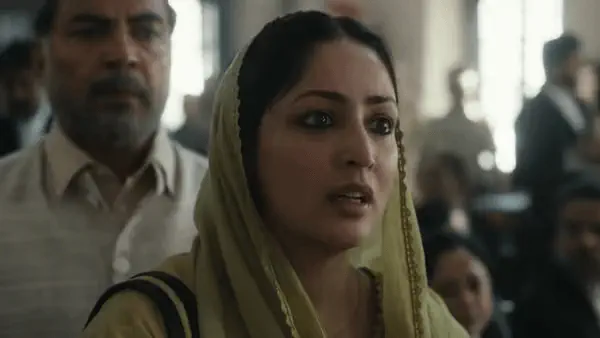
Film on the Shah Bano case dances around a thorny issue

There’s a scene in “Dhoom Dhaam” (2025) where Yami Gautam’s character goes off on a rant about patriarchy. It felt to me a moment written for the express purpose of being able to share on social media as a ‘mic-drop monologue’—which is exactly what Netflix did a few days after the release. I was reminded of this by a scene in Haq , where Gautam’s Shazia Bano, accosted in the marketplace, exhorts onlooking women to really read the Quran and not submit meekly to their husbands. Another mic-drop, I guess, but one complicated by the subject, the times, and the actor.
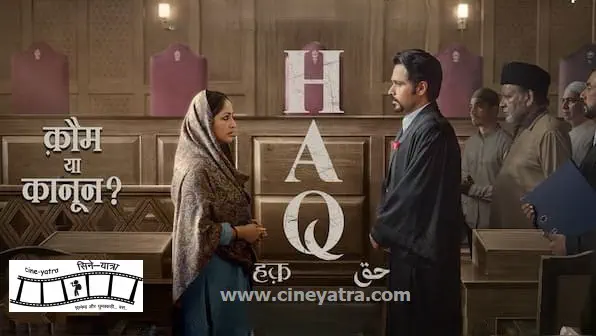
हक की बात ‘हक़’ के साथ

आज़ाद भारत की अदालतों में पेश हुए उल्लेखनीय मुकदमों में शामिल रहा है इंदौर की शाह बानो बेगम का वह केस जो उन्होंने अपने शौहर मौहम्मद अहमद खान के खिलाफ किया था। मुख्तसर बयानी यह कि अहमद ने पहला निकाह शाह बानो से किया जिससे उन्हें 5 बच्चे हुए। 14 साल बाद अहमद ने दूसरा निकाह कर लिया जिससे उन्हें 7 संतानें हुईं। इसके कई साल बाद जब अहमद ने शाह बानो को तलाक दिया तब शाह बानो की उम्र 62 साल थी। शाह बानो गुज़ारे भत्ते के लिए अदालत गईं। मामला सुप्रीम कोर्ट तक पहुंचा और वह जीतीं भी। लेकिन इस फैसले को मुस्लिम पर्सनल लॉ में दखल मानते हुए इसके खिलाफ देश भर में आंदोलन होने लगे। तब तत्कालीन राजीव गांधी सरकार ने 1986 में संसद में एक कानून बना कर सुप्रीम कोर्ट के फैसले को बेअसर कर दिया। यह फिल्म ‘हक़’ उसी केस पर पर आधारित है।
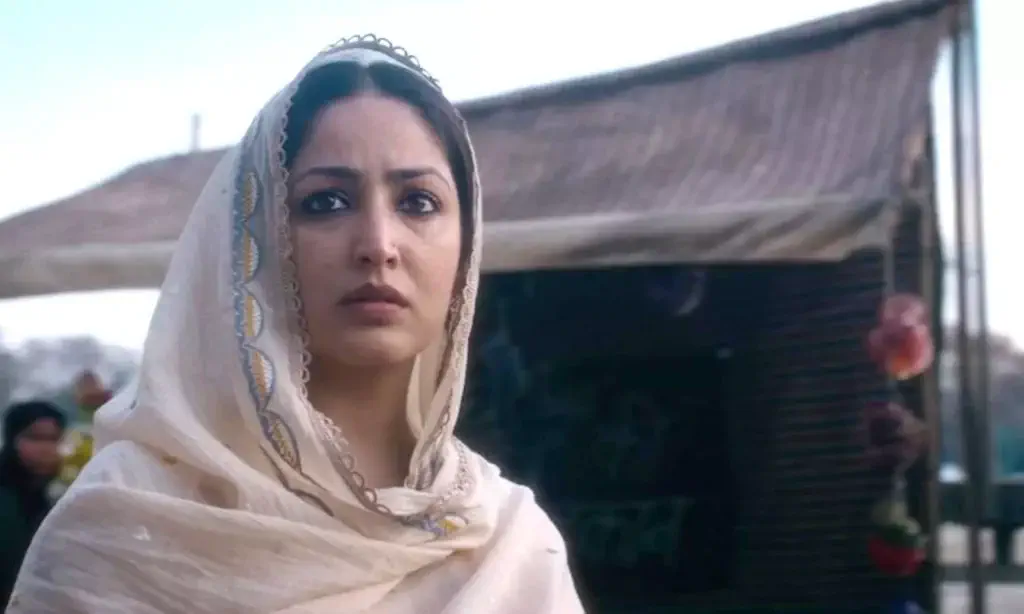
Yami Gautam excels in this one-time watch courtroom drama

The film starts off in 1967 in a town in Uttar Pradesh. Shazia Bano (Yami Gautam Dhar), a young girl full of life, gets married to the lawyer Abbas Khan (Emraan Hashmi). She is happy with choosing him as her life partner. She gives birth to two children and is pregnant with the third. This is when Abbas goes on a three-week visit to Pakistan to settle some property dispute in their ancestral place.
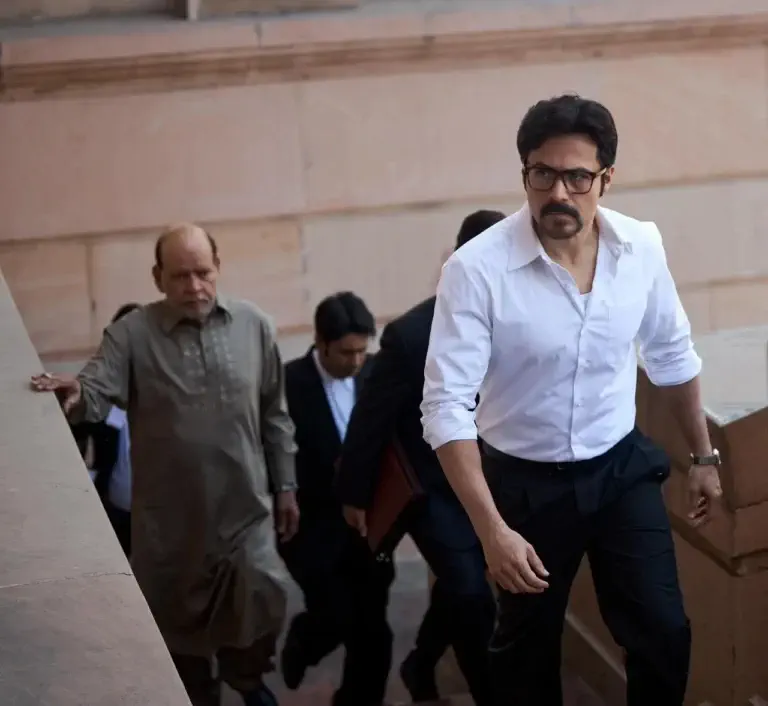
Yami Gautam sparkles in a women’s rights epic

It’s often said that if men were the ones to menstruate or give birth, the rules of the world would have been entirely different. Much has been written about women’s strength and multitasking abilities. Hindi cinema itself coined the famous line, “Woh stree hai, woh kuch bhi kar sakti hai.” But can we step aside from these mock-consolations for a moment and ask why women need such reaffirmations in the first place? Director Suparn S. Varma’s Haq is a harrowing tale of a woman who reaches the highest court of the nation seeking what is rightfully hers as a wife, a mother, and a woman.
Latest Reviews


Dhurandhar: The Revenge
Action, Crime, Thriller (Hindi)
As rival gangs, corrupt officials and a ruthless Major Iqbal close in, Hamza's mission for his… (more)

The Astronaut
Science Fiction, Horror, Thriller (English)
After returning from her first space mission, astronaut Sam Walker is placed under NASA’s care at… (more)