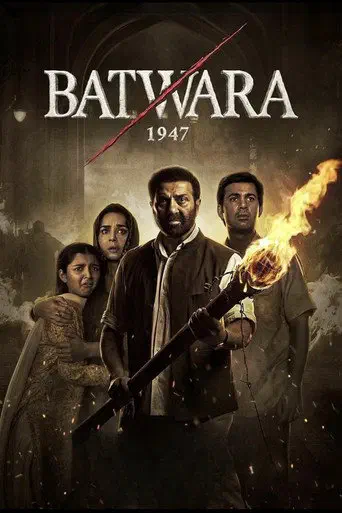
Batwara 1947
Action Drama War Hindi
The story of an elderly Hindu woman who refuses to leave her ancestral home in Lahore, only to have a Muslim refugee family from Lucknow allotted to her house following the events of the 1947 Partition of India and Pakistan.
| Cast: | Sunny Deol, Preity Zinta, Shabana Azmi, Ali Fazal, Karan Deol, Abhimanyu Singh, Kanikka Kapur, Khushi Hajare, Mithun Chakraborty, Mona Singh, Sunil Saraswat |
|---|---|
| Director: | Rajkumar Santoshi |
| Editor: | Shyam Salgoankar |
| Camera: | Santosh Sivan |

All Guild Reviews of "Batwara 1947"
BEYOND Simplistic

इंसानियत की बात ‘बंटवारा 1947’ में

1947 में हुए देश के बंटवारे के समय हर तरफ मची मारकाट के बीच मेरठ का सिकंदर मिर्ज़ा किसी तरह बच-बचाकर अपने परिवार के साथ लाहौर पहुंचा। कुछ दिन बाद उसे किसी हिन्दू की छोड़ी एक हवेली भी अलॉट हो गई। पर उस हवेली में तो उस हिन्दू की मां छुपकर बैठी थी, अपने बेटे के इंतज़ार में। शुरुआती ना-नुकर के बाद सिकंदर के परिवार ने तो उस औरत से तालमेल बिठा लिया लेकिन मज़हब और सियासत के कुछ ठेकेदारों को यह मंज़ूर नहीं हुआ। और फिर एक दिन…! यह कहानी दरअसल हिन्दी के मशहूर लेखक असगर वजाहत के 1989 में लिखे गए एक नाटक ‘जिस लाहौर नइ देख्या ओ जम्याइ नइ’ (जिसने लाहौर नहीं देखा वह पैदा ही नहीं हुआ) की है जो देश-दुनिया में काफी लोकप्रिय हुआ। किसी ज़माने में पंजाबी में यह कहावत कही जाती थी क्योंकि उस समय का लाहौर शहर अपनी समृद्ध संस्कृति, इतिहास, भव्यता, मेल-जोल वाली जीवन शैली आदि के लिए जाना जाता था और यह माना जाता था कि जिसने यह शहर नहीं देखा, उसका कोई वजूद ही नहीं है। लेकिन इसी शहर में बंटवारे के दिनों में कुछ लोगों ने इतिहास पर पानी फेरा था, संस्कृति का कत्ल किया था, भव्यता को उजाड़ा था और मेल-जोल की भावना को मिट्टी में मिलाया था। उसी लाहौर का चित्रण असगर वजाहत ने अपने इस नाटक में किया था जिसका नाम अपने-आप में एक व्यंग्य था। उसी कहानी को राजकुमार संतोषी अपनी इस फिल्म में लेकर आए हैं।
Is Intention and Messaging Enough?

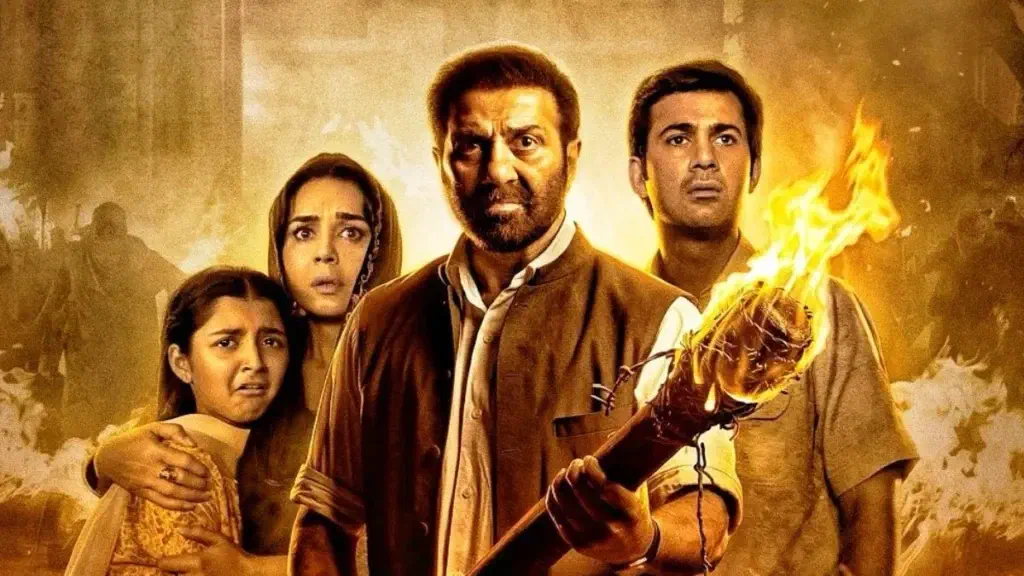
Sunny Deol’s Rage Finds a Noble Purpose

Bollywood doesn’t do solo Muslim male leads. In fact, it is both an ironic reality and an unspoken convention when the industry forces its pioneering Khan triumvirate to play upper-caste Hindus. Unless, of course, you have them as gangsters (Raees), terrorists (Fanaa), terrorism victims (My Name Is Khan), or a rare Mughal emperor (Jodhaa Akbar). Therefore, getting a superstar of Sunny Deol’s stature to play a compassionate Muslim hero in Batwara 1947 is a mini-revolution like Coolie and Sultan. Rajkumar Santoshi’s film is surprisingly well-timed in a society that still thrives on religious hatred, the seeds of which were sown decades ago, damaging India’s vibrant social fabric to a state of no repair.
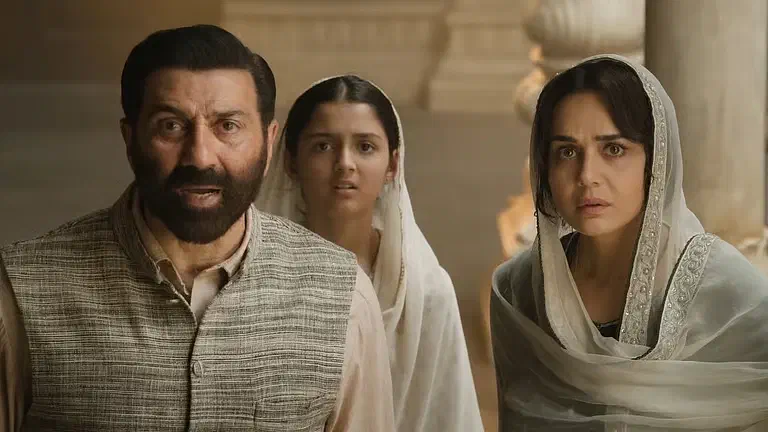
Sunny Deol Pummels Peace Into Submission

Rajkumar Santoshi’s Partition-era drama stages a daring premise as a Sunny Deol-sized plea for humanity
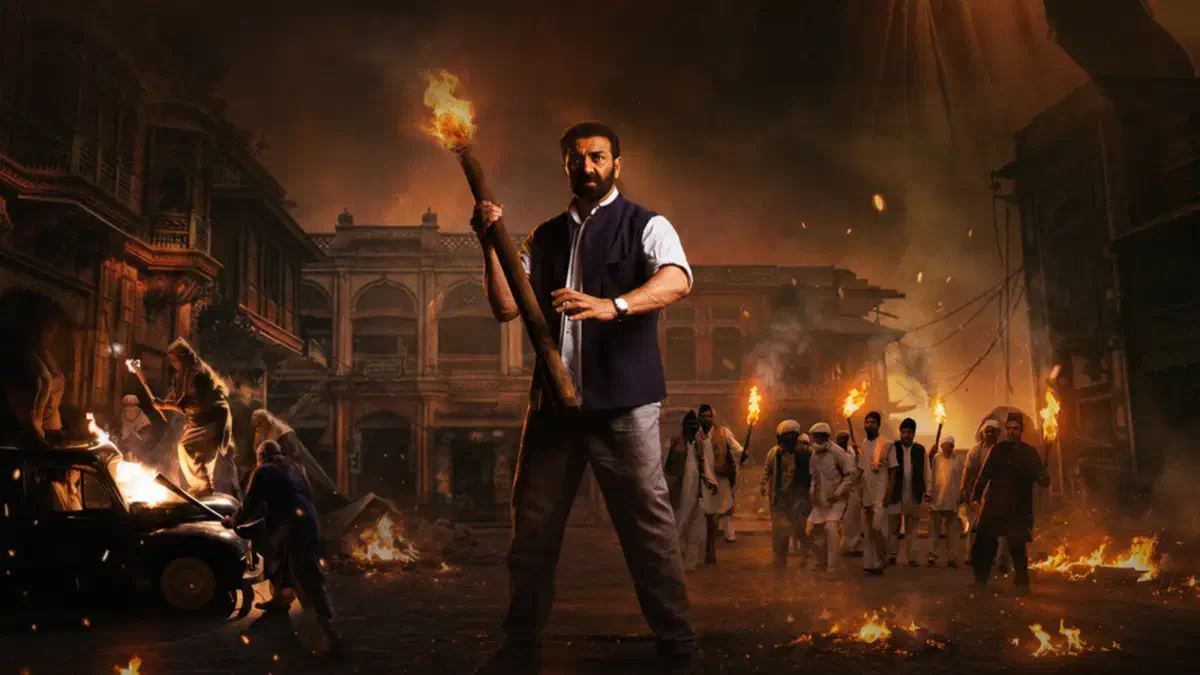
I don’t get to describe a premise like this too often, so let me enjoy writing this first paragraph. A prosperous Muslim family from Meerut — led by patriarch Sikandar Mirza (Sunny Deol) — is forced to flee for Lahore on a blood-soaked Partition night. Just like that, they have nothing. After months, they are allotted a house. But they move in to discover that it will never be their ‘home’; the displacement is permanent. An old Hindu lady (Shabana Azmi), the original owner, still lives upstairs. She waits for her own family to return, refusing to leave. Mirza, his wife (Preity Zinta) and his daughter overcome their biases and start to treat her like their mother; they celebrate her festivals and cook her food. This secularism draws the ire of the community; they’re a people still learning how to discriminate by faith and divide by appearances. The local troublemakers include an extremist goon (Abhimanyu Singh) and gang — they prey on the trauma of Mirza’s son, Javed (Karan Deol), and poison him. Tensions rise, and Mirza is threatened for harbouring the ‘enemy’. As a Deol, he resists.
Statutes of Unity

Based on Asghar Wajahat’s play Jis Lahore Nai Vekhya, O Jamya E Nai, like most films on Partition, Batwara 1947, has its heart in the right place. But, much like Main Vaapas Aaunga a couple of months ago, when it comes to cinematic storytelling, the film gets a bit muddled. The obligatory songs and romance unnecessarily dilute its essence, leaving you desperately wanting the story to move on. At its core, though, there is a strong message about values and respecting humanity. And Sunny Deol proves yet again that there is much more to him as an actor than being the man who can uproot a hand pump. This is one of his finest performances, one that goes beyond the dhai kilo ka haath and bashing up half a dozen people in an action sequence.
What Stays Intact Amidst Batwara

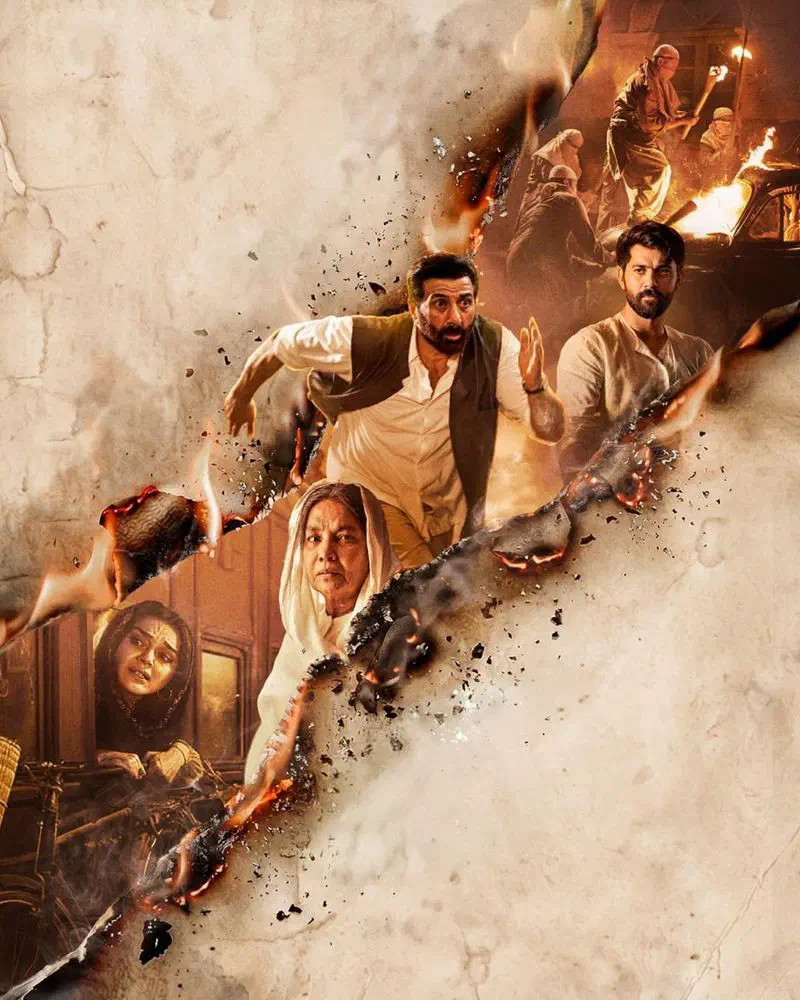
At the surface level, the film is about a bond that fosters between a Hindu woman and a Muslim family; at a deeper level, it is a story of innate human goodness surviving in the face of religious bigotry
Many of us have seen Asghar Wajahat’s poignant and widely staged play ‘Jis Lahore Nai Vekhya, O Jamya E Nai’. And most of us have seen Sunny Deol create ‘Gadar’ in cross-border love stories. So what happens when the two come together? Well, in Raj Kumar Santoshi’s ‘Batwara 1947’, Sunny Paaji’s dhai kilo ka haath is very much intact, if not forever in action, as he bashes up rioters on both sides of the border. What is heartening, though, is the emotive power of the film, which resonates with a fair degree of sentimentality, but is not misplaced. It is adapted from Wajahat’s play, written in 1989 and staged by eminent theatrepersons such as Habib Tanvir, Nadira Babbar and Arvind Gaur. The play might have been set during Partition, but there is no denying its universal timelessness.
Sunny Deol, Shabana Azmi's Film Delivers a Powerful Message on Secularism

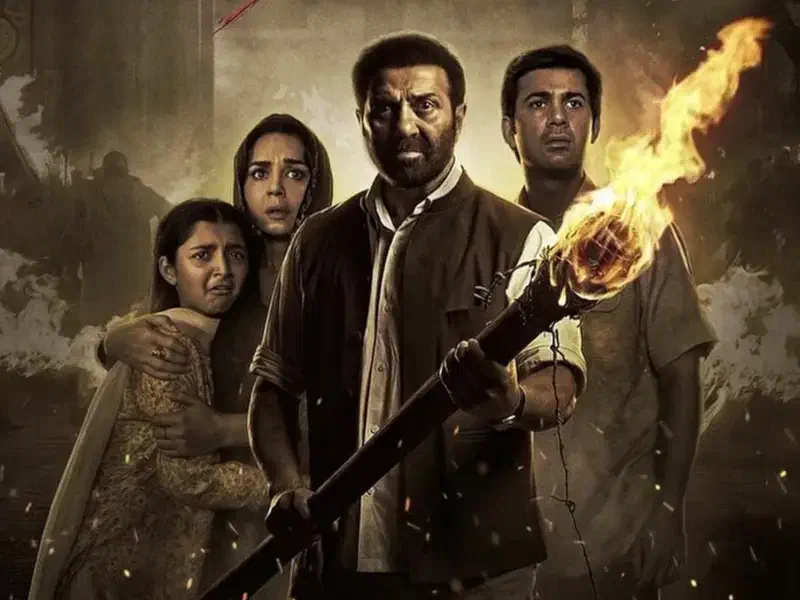
Batwara 1947 is a timely reminder about the secular fabric of India. Set against the backdrop of partition, Rajkumar Santoshi's film delivers a sharp message on communal harmony and has Shabana Azmi delivering a class act.
India’s independence from British rule came at a price. As the British left India, they ravaged and divided the country - emotionally, based on religion and geographically. The happiness of independence was far less on 15 August 1947, as so many families were destroyed; people were separated from their loved ones, their homes, and their motherland. The Partition led to the birth of Pakistan but also to a great Hindu-Muslim divide, an enmity that continues to this day between the two countries. Bollywood has made innumerable stories on India’s Independence and the partition. Most have narrated stories of brutality and riots that preceded partition. Filmmaker Rajkumar Santoshi’s latest release, Batwara 1947, flips the narrative a bit- telling the story of a Muslim family in Lahore in the aftermath of partition. Santoshi teams up with Sunny Deol, with whom he has delivered iconic films like Damini, Ghatak and more. Deol and Santoshi collaborate after decades, making Batwara 1947 special. The film also features Shabana Azmi, marks Preity Zinta’s comeback to Bollywood after a long time and has Aamir Khan as the producer. With such impressive names attached to the project, expectations are bound to be high for Batwara 1947. So, does it deliver? Let’s find out.
Latest Reviews
Village Rockstars 2
Music, Drama (Assamese)
Dhunu, now in her late teens, still climbs trees, swims, and most importantly, dreams of continuing… (more)


Hunkkaar: The Roar
Crime, Drama (Hindi)
A victim takes a courageous stand against a powerful godman accused of misconduct in an intense… (more)

Heart of the Beast
Adventure, Thriller (English)
After a harrowing plane crash, Special Forces officer James Belmont and his combat dog, Odin, find… (more)