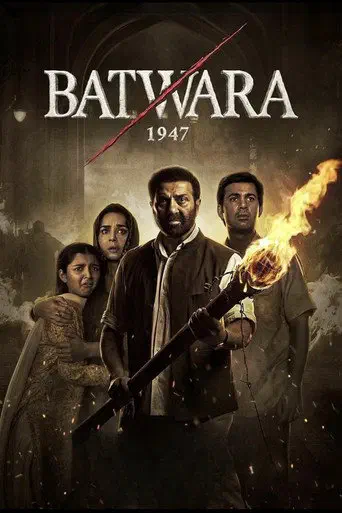
Batwara 1947
Action Drama War Hindi
The story of an elderly Hindu woman who refuses to leave her ancestral home in Lahore, only to have a Muslim refugee family from Lucknow allotted to her house following the events of the 1947 Partition of India and Pakistan.
| Cast: | Sunny Deol, Preity Zinta, Shabana Azmi, Ali Fazal, Karan Deol, Abhimanyu Singh, Kanikka Kapur, Khushi Hajare, Mithun Chakraborty, Mona Singh, Sunil Saraswat |
|---|---|
| Director: | Rajkumar Santoshi |
| Editor: | Shyam Salgoankar |
| Camera: | Santosh Sivan |

All Guild Reviews of "Batwara 1947"
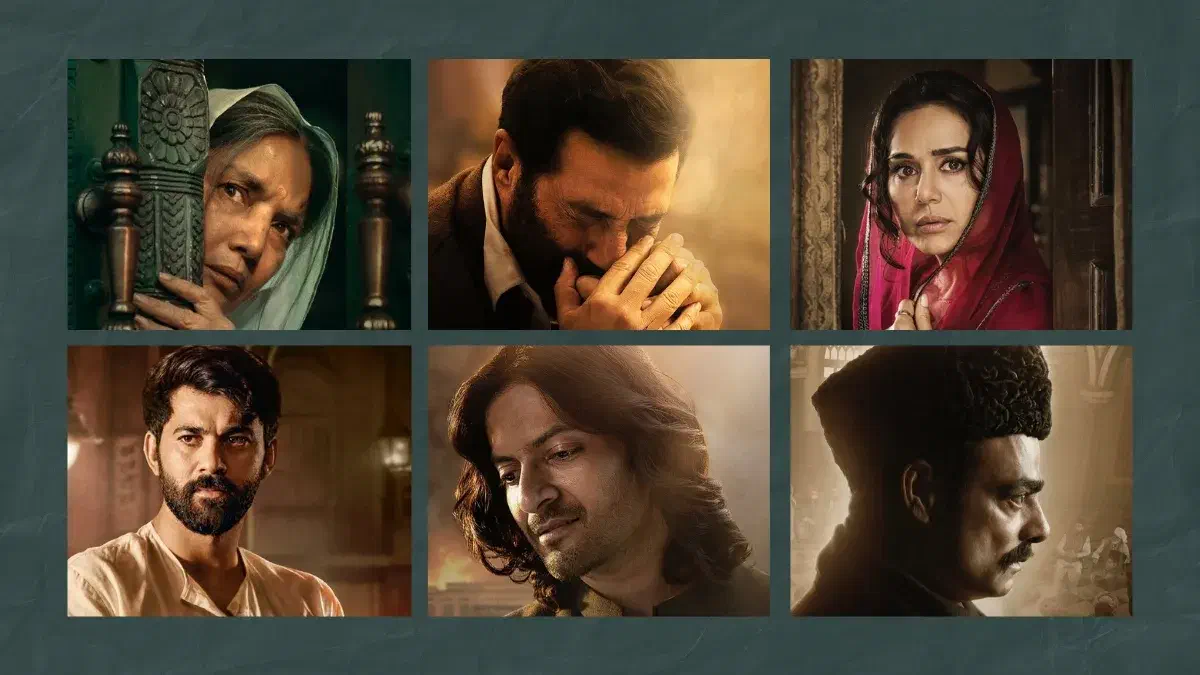
Despite Its Execution Flaws, It Deserves a Watch for Its Brave Messaging and Noble Intent.

Do we really need to see another film on Partition? Especially one that comes right on the heels of Main WapisAaunga? Yours truly certainly had her doubts. After all, it’s not the first time Sunny Deol has crossed over to Pakistan. Who could ever forget the jatt driving the truck in Gadar? What was he going to do this time? Fortunately, all questions are answered and all doubts assuaged after watching Batwara 1947. To say that we “enjoy” the film feels perfectly fine as a sentence.However in the context of a movie dealing with Partitionthe word becomes problematic. How can anyone truly “enjoy” a film that spotlights the most painful chapter of our history? How do we grasp the enormity of a tragedy where millions were uprooted and forced to leave overnight leaving behind scars that remain raw to this day?
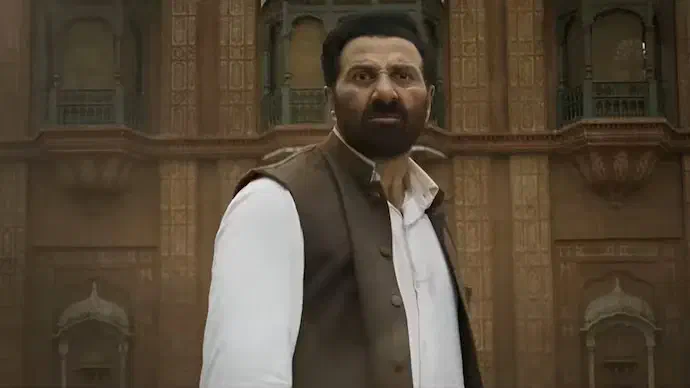
How Sunny Deol's 'Batwara 1947' Slips on Soap Opera-Like Storytelling

Filmmaker Rajkumar Santoshi takes the road less travelled, but the crusade for inclusivity loses potency to in-your-face treatment and hammy performances
The first dialogues of period drama Batwara 1947 resonate with the mood of the nation at present. A crowd chants ‘Bharat Mata Ki Jai’ on the eve of Independence. Sunny Deol’s Sikander Mirza, a factory owner in Meerut, is enthused, distributing sweets and decorating the neighbourhood to celebrate the occasion. His is the Nehru jacket-wearing Muslim with no kohl under eyes or cap on head. Soon, he realises that his allegiance to the new nation is irrelevant as his loyalty is only determined by his faith. Muslims, he discovers in disturbing manner, are no longer wanted in Bharat. A reluctant, forced migration via train happens.
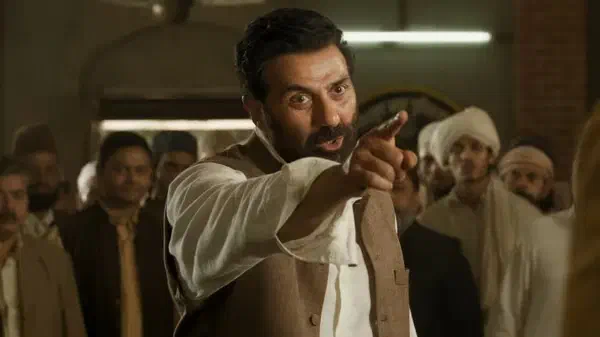
Partition Film Too Safe and Staid to Speak to the Times

Rajkumar Santoshi's ‘Batwara 1947’, about Muslim refugees from India in Lahore after Partition, has neither the curiosity nor courage to break new ground
Halfway through Batwara 1947, bored out of my mind, I started to wonder how the film might be if instead of Shabana Azmi playing the old homeowner it was Naseeruddin Shah channeling his Ishar Singh from Main Vaapas Aaunga. It’s not that Azmi isn’t effective, just that Mai—a Lahori Hindu who’s lost her family in the tumult of Partition and whose house is allotted to Muslim refugees from India—can only ever be an object of pity. On the other hand, a cranky, rude old timer who resents the Muslims occupying his home… now that might be a challenge to the audience. Rajkumar Santoshi’s film isn’t interested in challenges. It wants to appear bold without actually being bold. It’s adapted from a broad, didactic play by Asghar Wajahat, Jis Lahore Nai Vekhya, O Jamya E Nai, and the film ends up even more of a sermon. Aamir Khan, co-producer with Aparna Purohit, has never stopped lecturing viewers since the 2000s, but at least he usually does his own preaching. Here, confusingly, it’s Sunny Deol, who’s calling for universal brotherhood one minute and horse-whipping a dozen men the next.
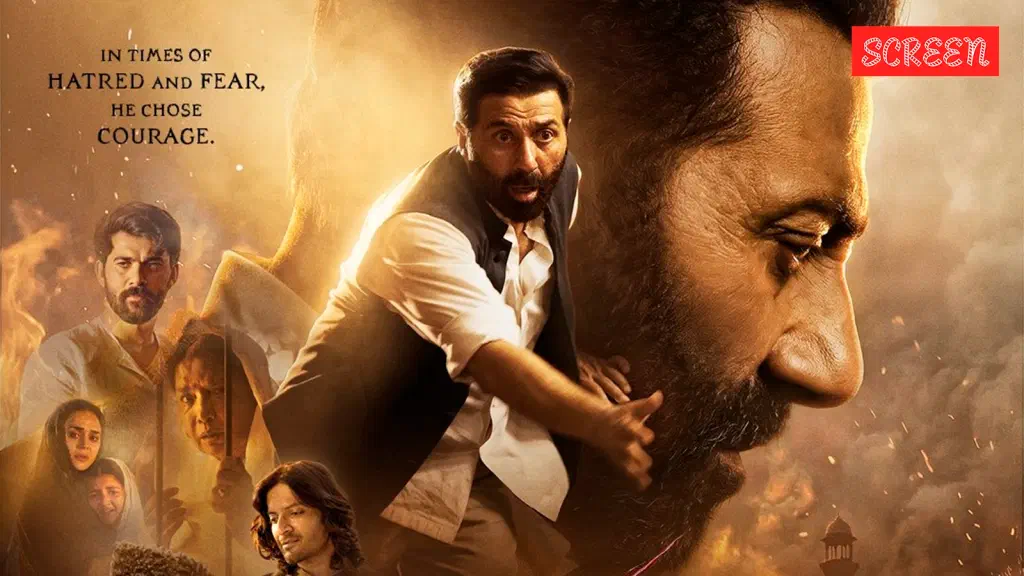
Sunny Deol Is Let Down by Dated, Banal Storytelling

The message is loud and clear: no religion is evil, only humans are; nafrat can be conquered through pyaar, siyasat se mazhab ko na milao; and above all, maanvata se bada koi dharam nahin. But they come as a listicle, instead of making you feel.
In its opening credits, Batwara 1947 brings back a significant logo. The title appears in Urdu along with Hindi and English, like it used to through so many decades, a practice which vanished quietly in the last decade. That erasure, gradual but evident, is an indicator of the state of the nation, which is busy being polarised over religion and language. It also marks a reunion between Rajkumar Santoshi and Sunny Deol, a director-star duo who gave us Ghayal, Damini, Ghatak, some of the most enduring hits of the 90s. Capturing a specific time and place, those films had a strong streak of social realism which Santoshi had a knack for, and which Deol channeled with rage and purpose.
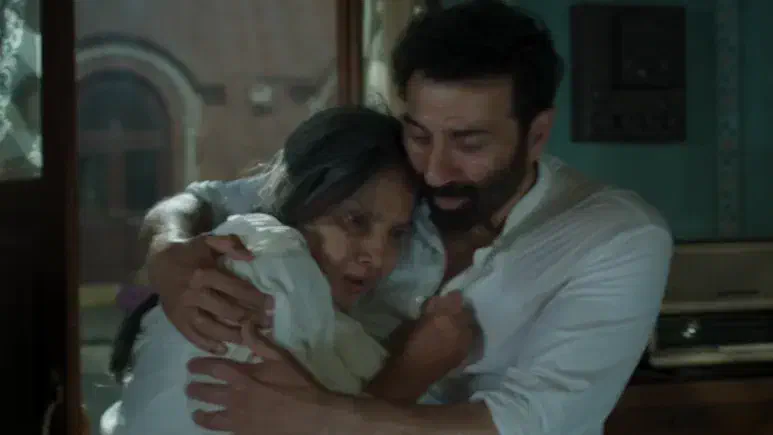
Shabana Azmi Does What Naseeruddin Shah Did in Main Vaapas Aaunga

Sunny Deol makes the most of the film's quieter moments and emotive scenes to add a kind of weight that is far more powerful than his fists of fury.
Rajkumar Santoshi, reuniting with Sunny Deol three decades after their hattrick of 1990s superhits (Ghayal, Damini, Ghatak), takes the core of Asghar Wajahat’s celebrated 1989 play Jis Lahore Nai Vekhya O Jamyai Nai and effects sweeping textual changes to expand the dramatic scope of the screen adaptation, Batwara 1947. Some of extensions hit home, a few don’t. The tweaks in the period drama bankrolled by Aamir Khan Productions are dictated by the need to heighten emotional impact and give the lead actor a lion’s share of the footage. On both counts, the writer-director gets it right. Well, almost.
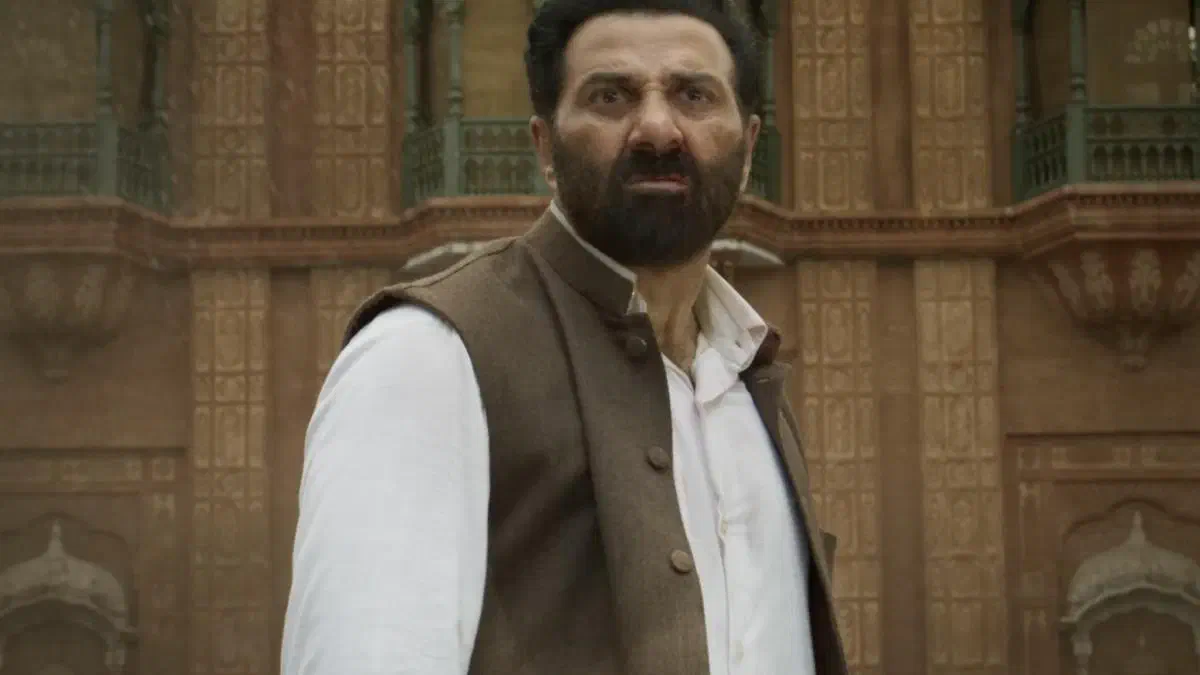
Sunny Deol-Shabana Azmi Symphony Breathes Life Into Partition Drama

Rajkumar Santoshi repurposes Sunny Deol’s might and Asghar Wajahat’s text to interrogate modern-day fanaticism with mixed results.
In a cinematic landscape dominated by polarised, ‘us versus them’ period pieces, Rajkumar Santoshi serves a humanistic counter-narrative this partition day. Based on Asghar Wajahat’s seminal play Jis Lahore Nai Vekhya O Janmeya Nai, the film poignantly handles the play’s core ideological conflict and subverts Sunny Deol’s popular persona to underline that human empathy and shared grief can outlast any artificial border. A Muslim refugee family from Meerut is allocated a Lahore haveli vacated during Partition, only to discover an elderly Hindu woman, Durga Devi or simply Mai, refusing to leave. Having just survived the horrific communal violence, Sikandar Mirza and Hamida (Preity Zinta) arrive in Lahore carrying immense psychological trauma. To them, the allocated haveli is a hard-earned refuge and a rightful compensation for everything they lost in India.
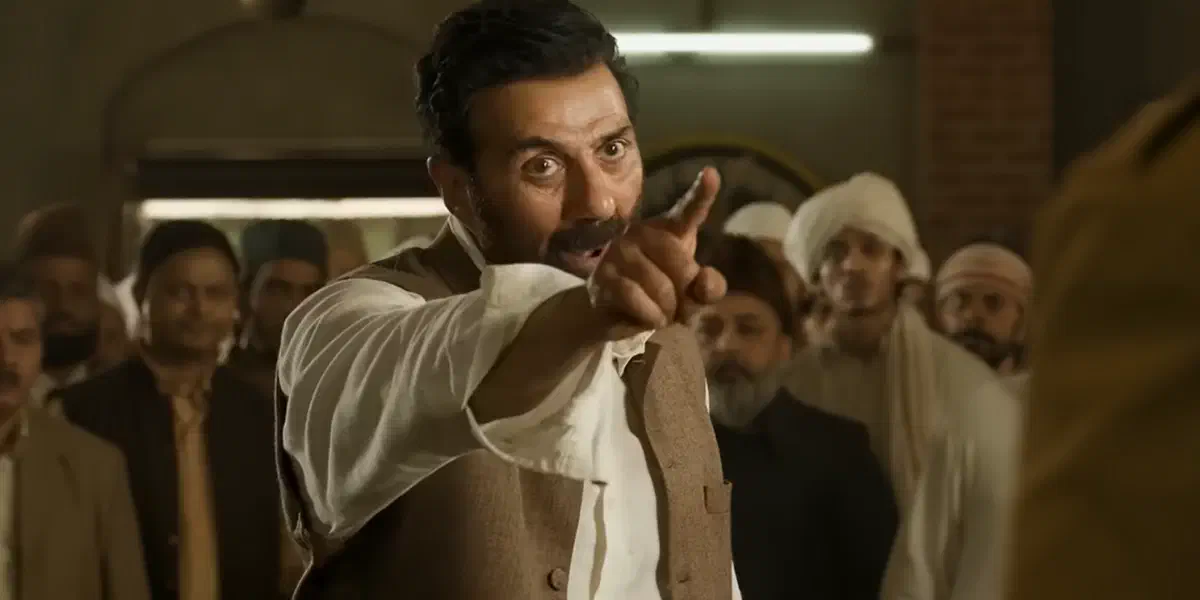
Feels Partitioned Between Its Brave Source Material and Dumbed-Down Narrative

Rajkumar Santoshi’s vital secularism PSA is made for second-screen viewing.
A.R. Rahman has been trusted to do the heavy lifting in the climaxes of his recent films. The wailing vocals at the end of Chhaava (2025), Arijit Singh blazing through the title track in the climax of Tere Ishk Mein (2025) or the wistful ache of ‘Tere Paas Main’ (sung by Deepali Sahay) making Main Vaapas Aaunga (2026) a pristine tearjerker. Even in Rajkumar Santoshi’s Batwara 1947, Rahman shows up in the final minutes of the film, this time with a guttural hum by the man himself. The effect isn’t nearly as visceral as his last few films. Rahman’s score and songs for Batwara 1947 feel half-hearted compared to his work in the other partition drama from a few months ago. That nearly-there-but-not-quite feeling around Rahman’s music is what I might also say about my reaction to Santoshi’s film on the whole.
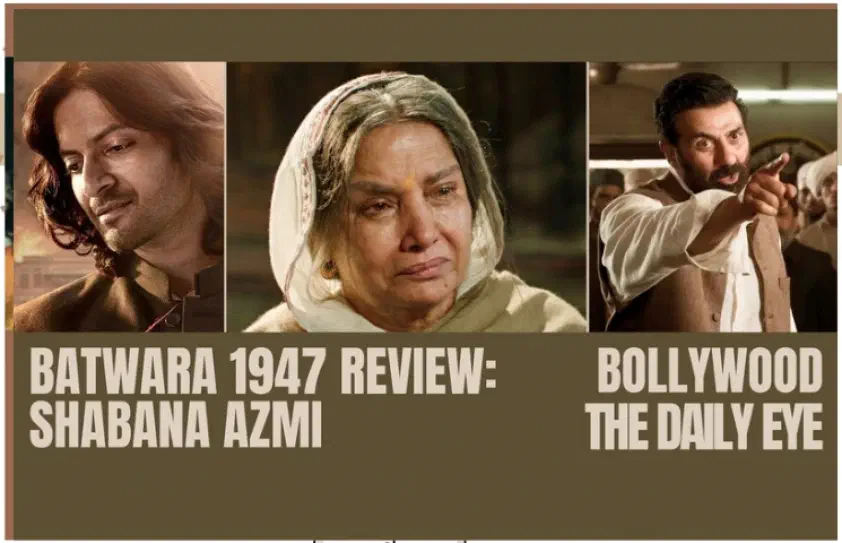
SHABANA AZMI!

Shabana Azmi’s towering performance becomes the emotional soul of a nation divided.
Every nation carries within it a wound that history refuses to let heal. Few events in the history of the subcontinent have left a wound as profound, intimate and enduring as the Partition of British India in 1947. More than 15 million people were uprooted from their ancestral homes, while the death toll is estimated to have reached as high as two million. But statistics, however staggering, can never adequately convey the human cost of Partition—the homes abandoned overnight, families torn apart, identities violently rearranged, and memories passed from one generation to the next like an inherited grief. Batwara 1947 attempts to enter that vast historical tragedy through the intimacy of one household.
Latest Reviews
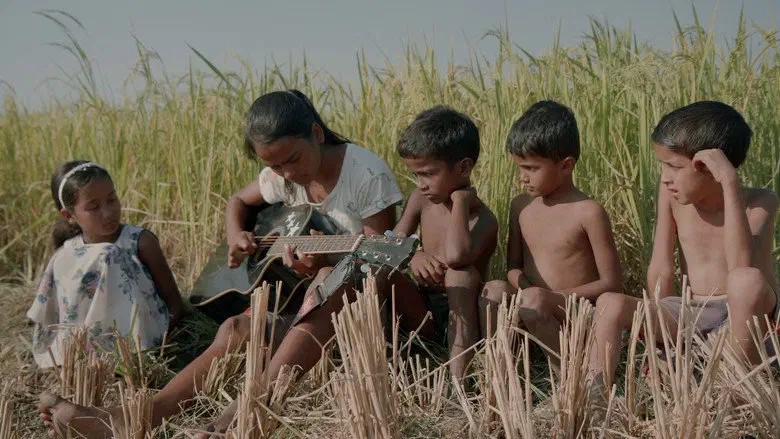
Village Rockstars 2
Music, Drama (Assamese)
Dhunu, now in her late teens, still climbs trees, swims, and most importantly, dreams of continuing… (more)

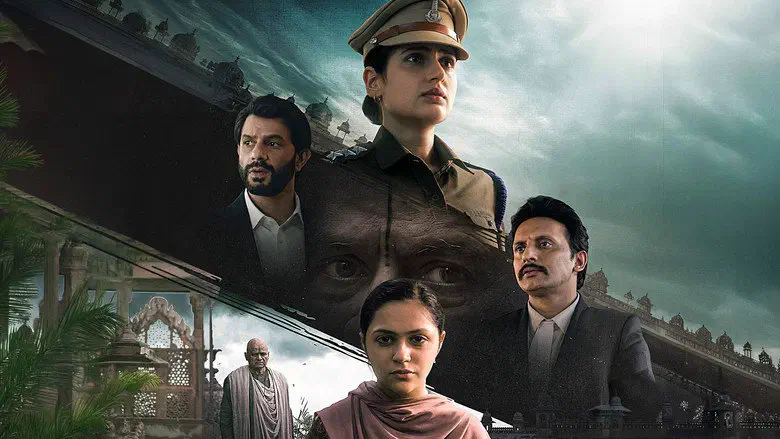

Hunkkaar: The Roar
Crime, Drama (Hindi)
A victim takes a courageous stand against a powerful godman accused of misconduct in an intense… (more)

Heart of the Beast
Adventure, Thriller (English)
After a harrowing plane crash, Special Forces officer James Belmont and his combat dog, Odin, find… (more)