
Assi
Crime Drama Thriller Hindi
An investigative courtroom drama based on the alarming statistic of nearly eighty sexual assault cases reported daily in India. In just one day. Every day.
| Cast: | Taapsee Pannu, Kani Kusruti, Mohammed Zeeshan Ayyub, Manoj Pahwa, Kumud Mishra, Revathi, Naseeruddin Shah, Supriya Pathak, Rajendra Sethi, Satyajit Sharma, Seema Pahwa |
|---|---|
| Director: | Anubhav Sinha |
| Writer: | Gaurav Solanki, Anubhav Sinha |
| Editor: | Amarjit Singh |
| Camera: | Ewan Mulligan |

All Guild Reviews of "Assi"
Heavy-Handed Cinema for Heavy Times


Designed to Speak the Language of Manipulation Instead of Nuance

Assi is not Sinha’s finest hour as a director, but the lack of sophistication might be necessary to reach an audience that otherwise laps up mean-spirited propaganda.
At one point in Anubhav Sinha’s Assi, a father (Manoj Pahwa) and his son (Abhishant Rana) are devouring a plate of chhole bhature. The father says, “Your mother is an excellent cook, but the chhole bhature she makes is… okay. No shame in eating outside once in a while. You can get a plate like this for Rs 60, maybe Momos for Rs 90,” he says, going on to add – “but a man never brings these home.” Only towards the end, does a woman overhearing the conversation realise that the duo aren’t talking about her food. The son is shown to be an accomplice in a rape, a few scenes earlier. I can see why co-writers Sinha and Gaurav Solanki [the duo had also earlier written Article 15] might lean on the wryness of a scene like this to explain a perpetrator’s mindset. But the scene feels too satisfied with its oversimplified metaphors for deep-seated dishonesty and compartmentalisation that the (primarily) male, urban population is capable of.

No Safety in Numbers

There is no gentle way to say this—Anubhav Sinha’s Assi hits you hard. It is, at times, an uneasy watch—and therefore, a very good film. To be clear, the unease does not come from graphic visuals; it comes from statistics read aloud by a lawyer, from stark statements that linger long after they are spoken. If merely listening to these details causes discomfort, one can only imagine the horrors endured by the victims. Sinha not only stabs us in the heart; he twists the knife—quietly, deliberately.

JUSTICE on TRIAL

A Scathing Indictment of a Society Where Justice Arrives Too Late.
A nation that measures sexual violence in minutes rather than in isolated tragedies has already indicted itself. In India, a rape is reported, on average, every twenty minutes—a statistic so numbing in its repetition that it risks becoming background noise. More damning still is the chronic failure of justice: cases stall, survivors are scrutinized more ruthlessly than perpetrators, and institutions meant to shield the vulnerable too often retreat into silence or self-preservation. It is into this moral quicksand that Anubhav Sinha strides with Assi, a film that refuses both euphemism and escape.

Rage Overwhelms Anubhav Sinha’s Urgent Film

Assi is simmering with rage. While the morality is beyond scrutiny, the tactile consequence of the fury interrupts the filmmaking.
There is a scene in Anubhav Sinha’s Assi, a social drama in the shape of legal deliberation, where a female lawyer gets into a heated argument with a male police officer. There is a context here: rape. In Delhi, a woman was gangraped and the accused, four till then, systematically erased and misled evidence. Frustrated, the cop gets hold of an accomplice and threatens to get a confession. Seeing this, the lawyer, representing the survivor, erupts. “You think only you are angry?” she charges at him. “We are so angry that we can burn the world. We just don’t want to.” In many ways, the speaker, Raavi (Taapsee Pannu), is the film’s chosen voice, yet Sinha’s work, too, is dipping with rage.

An Unyielding Indictment of Collective Complicity

Led by a fiercely committed ensemble, this moral interrogation of rape culture by filmmaker Anubhav Sinha dissects the anatomy of sexual violation and the perilous world we have built for our children
Javed Akhtar once famously said art and culture are the vocal cords of society. This week, writer-filmmaker Anubhav Sinha and co-writer Gaurav Solanki give a sarkari statistic on rape, a scarred face, an unflinching voice, and a social context. The outcome is deeply disquieting as the film investigates the pervasive rape culture, institutional complicity, and the gruelling aftermath for survivors. Sinha’s relentless expression of the state of helplessness and depravity makes one leave an impression of anguish on the seat’s armrest.
Traumatic, Hard-Hitting, Unavoidable

Watch it, not for you are a man or a woman, but as an integral member of a society which needs course-correction
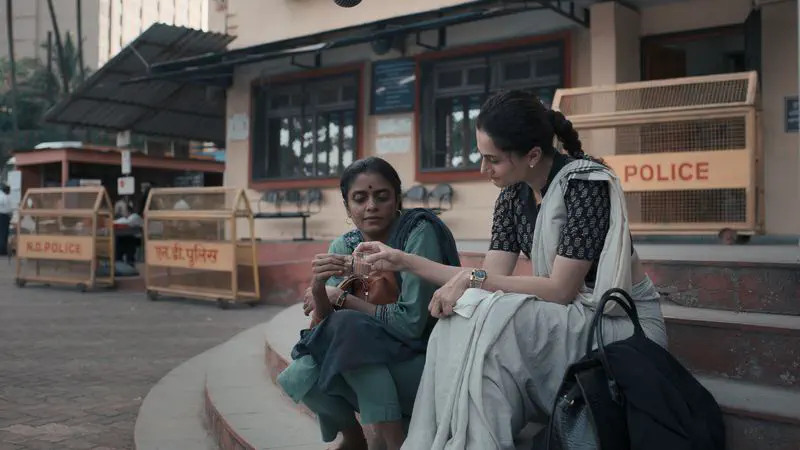
How often have we read news reports of a woman being gangraped in a moving car and how often have we turned insular to reportage of such heinous incidents? In his latest film ‘Assi’, acclaimed director Anubhav Sinha not only gives a face, heart and soul to a rape survivor, but also stirs something deep within us. With horror, we watch a young woman, Parima (Kani Kusruti), being pulled into a car by a bunch of youngsters. Hereafter, what happens is meant to evoke repugnance and Anubhav succeeds in bringing out the reprehensibility of the crime in a no-holds-barred sequence. How can this crime against women, rather humanity, be fun for some? The thought is as unsettling as searing.

Anubhav Sinha's Film Asks Pointed Questions About Rape Culture

‘Assi’, starring Taapsee Pannu, investigates the broader system that often allows sexual assault to go unpunished
Anubhav Sinha directs a script by Gaurav Solanki and himself, to craft a courtroom drama that approaches sexual violence through the lens of law, procedure and the domestic impact of violence. The film begins in the hard-hitting way it means to proceed, sparing no punches. Parima, the survivor, played by Kani Kusruti, is introduced as a working woman who lives independently and moves through the city on her own terms. She shares an easy relationship with her husband Vinay (Mohammed Zeeshan Ayyub). Parima travels alone at night in Delhi, something the film initially treats as completely normal, until she notices a car following her. The rape sequence that follows is intentionally hard to watch, with the glee of the men juxtaposed with the heartless, brutal violence against the woman. Only later, in the courtroom, does her decision to be out alone at night get quietly reframed as poor judgement, revealing how quickly a woman’s independence can be turned against her.
Latest Reviews


Bethlehem Kudumba Unit
Romance, Comedy, Drama (Malayalam)
Ashley's homecoming from abroad takes an emotional turn when a wedding next door stirs memories of… (more)

Your Mother Your Mother Your Mother
Action, Crime, Drama (English)
Latif, a devoutly religious hitman, struggles to balance work, faith and fatherhood. When his wife dies,… (more)

Thella Kaagitham
Drama (Telugu)
Two teenagers discover first love amid the innocence, mischief, and uncertainties of adolescence. As they fall… (more)

Dupahiya 2
Comedy, Drama (Hindi)
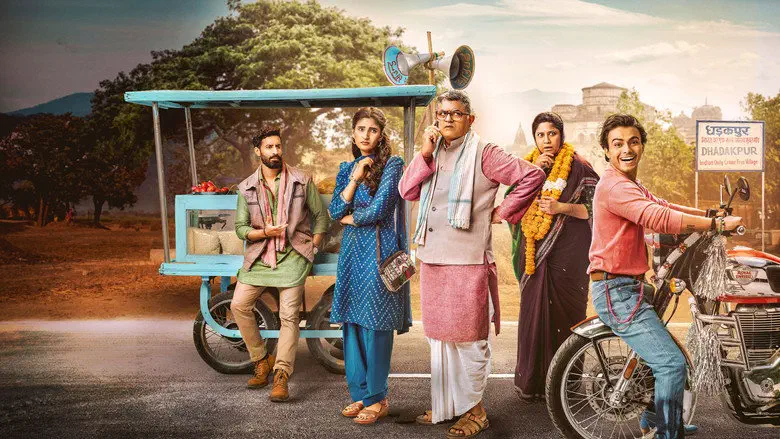
Dhadakpur, the Belgium of Bihar, is on the cusp of celebrating 25 years of being crime… (more)